Anion Gap Calculator for Serum Electrolyte Interpretation
What’s the Anion Gap?
The anion gap is a derived result used in electrolyte panel review to help assess acid-base balance and detect likely causes of an electrolyte imbalance. It is not directly measured on a blood test; instead, it https://anion-gap-chart290.iamarrows.com/anion-gap-calculator-in-mmol-l-formula-range-and-meaning is derived from common serum chemistry values, usually from a basic metabolic panel or comprehensive metabolic panel.
Clinically, the anion gap functions as a helpful diagnostic marker because it can show whether acids or other charged substances are accumulating in the blood. A low or high result can suggest a certain metabolic disorder, but the number must always be read in context. That is why laboratory interpretation counts just as much as the calculation itself.
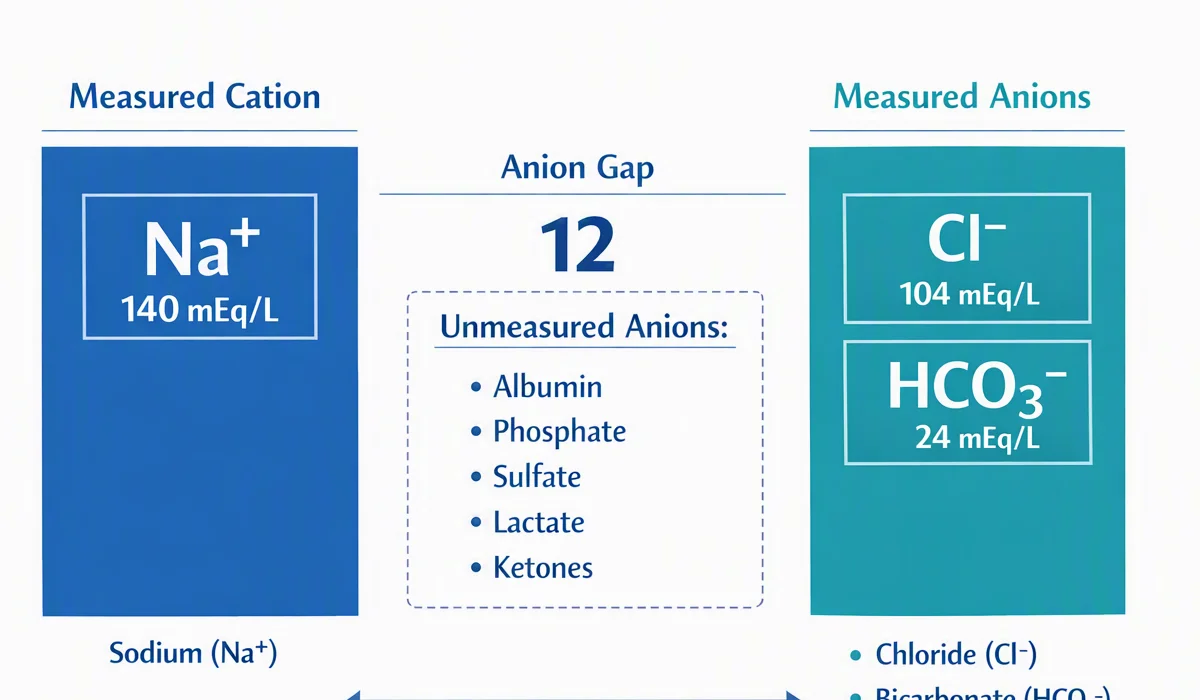
In simple terms, the anion gap represents the relationship between measured positively charged ions and measured negatively charged ions. If the balance shifts, the gap may suggest the presence of unmeasured ions, including acids and other substances that are not listed on routine electrolyte testing.
How an Anion Gap Calculator Works
An anion gap calculator relies on the core electrolyte values from a panel, notably sodium, chloride, and bicarbonate. These values are the key inputs in the standard anion gap formula, which determines the gap between measured cations and anions.
The standard calculation is:
Anion gap = sodium - (chloride + bicarbonate)
Some laboratories may use different equations or reference intervals, but the concept is unchanged. A few calculators also account for potassium, though many routine clinical interpretations do not include it because potassium plays a smaller role to the overall result.
The reason the formula works is that routine electrolyte testing measures only some of the charged particles in blood. The remaining difference represents the “gap,” which can point to organic acids, other unmeasured ions, or changes in protein levels. This makes the anion gap a practical tool for lab analysis and patient evaluation, especially when investigating an acid-base disorder.
For example, if sodium is 140, chloride is 100, and bicarbonate is 24, the calculation is 140 - (100 + 24) = 16. That result may be interpreted in a different way depending on the lab’s reference interval and the patient’s complete clinical picture.
Normal Anion Gap Range and Interpretation
The normal anion gap depends on the lab reference range established by the testing facility and whether the calculation includes potassium. Because different analyzers and methods can produce slightly different values, the same number may be normal in one setting and borderline in another.
Generally, interpretation should focus on whether the result falls within the local normal range and whether there are signs of metabolic acidosis or other abnormalities. One result near the upper end of the range may still be meaningful if symptoms or other lab findings suggest a problem.
Important points to note during interpretation:
- This gap is a calculated estimate, not a directly measured value.
- Reference intervals vary by laboratory and analyzer methodology.
- Trends over time may be more informative than one result.
- Abnormal results should be reviewed alongside electrolytes, kidney function, and clinical findings.
As this value is part of broader blood chemistry review, it should never be used in isolation. Normal findings does not exclude disease, and an unexpected result does not identify the cause by itself.
What Causes a Elevated Anion Gap?
A increased anion gap typically indicates the build-up of acids or other negatively charged substances in the blood. The main clinical concern is acid buildup, especially when the body is making or holding on to excess acid faster than it can eliminate it.
Important causes of high anion gap include:
- Excess lactate, which can occur when tissues do not get enough oxygen or when metabolism shifts toward lactate production.
- Ketone buildup, including diabetic ketoacidosis, alcoholic ketoacidosis, or starvation-related ketosis.
- Renal failure, where impaired kidney function reduces acid excretion and leads to retention of acids and other waste products.
Other causes may involve toxins or unusual metabolic states, but the most clinically relevant high-gap patterns often point to a evaluation for metabolic acidosis. This is where the anion gap helps narrow the differential diagnosis and shape next steps.
In practice, a high value suggests that the measured bicarbonate has been consumed counteracting excess acid, while the gap expands because of accumulated acidic byproducts or other retained anions. That makes the result a useful clue during patient assessment, especially if symptoms such as rapid breathing, confusion, vomiting, dehydration, or altered mental status are present.
What Causes a Low Anion Gap?
A low anion gap is not as common than a high one, but it can still be medically significant. The most frequent explanation is hypoalbuminemia, because albumin is a key negatively charged protein in blood. When albumin decreases, the gap often falls with it.
Additional causes to consider include:
- Lab error or specimen issues, which should always be ruled out first.
- Multiple myeloma or related plasma cell disorders, which can alter protein patterns and change measured relationships.
- Presence of unmeasured cations, such as some medications or electrolyte abnormalities that disturb the balance of charged particles.
A low result may be overlooked because it does not always signal an emergency, but it can provide an useful clue. For example, a persistently low value alongside anemia, kidney dysfunction, bone pain, or abnormal protein studies may support further evaluation for multiple myeloma. Likewise, a sudden isolated low result should prompt consideration of lab error before additional workup.
Although the phrase “anion deficit” is sometimes used casually, the key concept is the same: a reduction in the expected difference between measured cations and anions. That difference often reflects changes in proteins, measurement artifacts, or unmeasured ions.
Corrected Anion Gap and Albumin Correction
Albumin greatly influences the anion gap because it carries a negative charge and plays a part significantly to the normal balance of plasma proteins. When albumin is low, the calculated gap may appear falsely normal or low even when clinically relevant acidosis is present. This is why the corrected anion gap is so useful.
Albumin adjustment, also called albumin correction, assists account for the effect of reduced protein concentration on the measured value. In many clinical settings, a low albumin level can mask a high-gap metabolic problem, especially in critically ill patients or those with significant chronic disease.
The exact correction factor may vary by institution, but the general principle is consistent: add an amount to the measured gap based on how far albumin is below normal. This gives a more realistic picture of acid-base status and enhances clinical significance when interpreting lab results.
Protein changes matter because of protein binding. Albumin helps stabilize and bind ions, so when its concentration drops, the measured chemistry shifts. A corrected value can therefore reveal hidden metabolic acidosis that would otherwise be underestimated.
Whenever albumin is abnormal, the corrected result should be considered part of a wider serum chemistry review rather than a stand-alone number.
Anion Gap in Acid-Base Disorders
This anion gap remains especially useful in reviewing metabolic acidosis. During a high-gap disorder, the body has built up acids that are not directly measured on a routine panel. With a normal-gap acidosis, bicarbonate may decline, but chloride rises to keep electroneutrality, so the gap stays within range.
Respiratory compensation also is important. When metabolic acidosis develops, breathing may speed up to lower carbon dioxide and partially offset the acid load. That compensation does not resolve the underlying problem, but it can influence how the patient presents and how the blood chemistry is read.
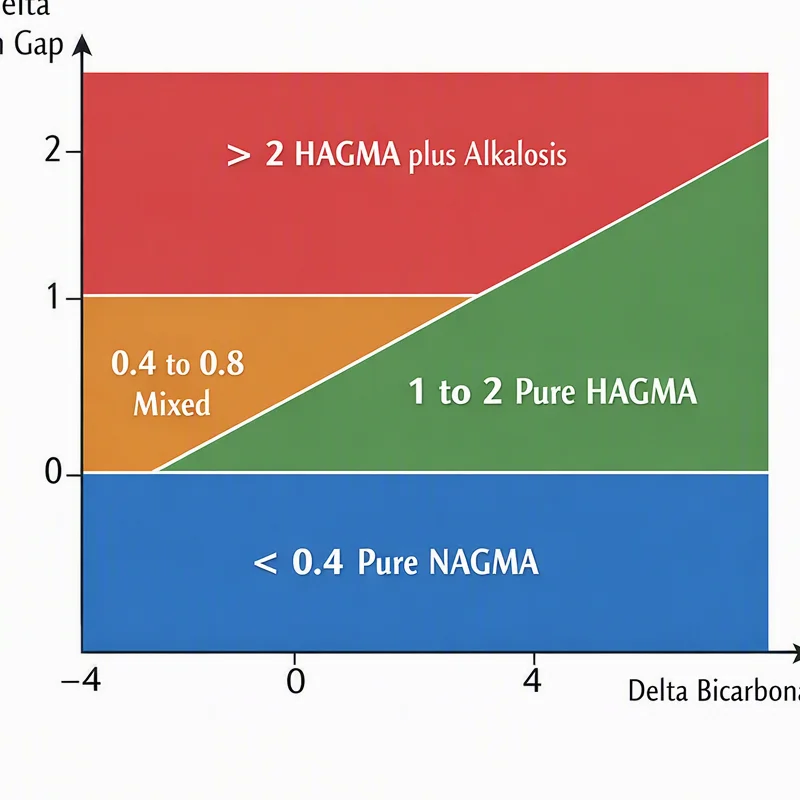
A useful concept in mixed disorders is the delta gap. This relates the rise in anion gap to the fall in bicarbonate and can help determine whether there is an additional acid-base problem present. As an example, if the gap rises more than expected, there may be concurrent metabolic alkalosis or a mixed disorder. If bicarbonate falls more than the gap rises, another process may be present too.
Understanding these relationships improves recognition of complex acid-base balance problems. An anion gap result should therefore be viewed as one part of a broader pattern that includes respiratory status, kidney function, symptoms, and the rest of the electrolyte profile.
How to Interpret Results Clinically
Clinically, the most effective purpose of an anion gap result is to support patient evaluation. It should be interpreted alongside electrolytes, kidney markers, glucose, lactate, ketones, and the overall blood chemistry panel. The value may help decide whether urgent evaluation is needed or whether further testing should focus on a specific cause.
A structured approach often includes the following:
- Examine the full electrolyte panel or basic metabolic panel and verify that values are internally consistent.
- Check whether albumin is abnormal and use a corrected anion gap.
- Look for for signs of metabolic acidosis, including tachypnea, dehydration, confusion, or weakness.
- Review kidney function, glucose, lactate, and ketones based on symptoms and history.
- Recheck testing if the value does not fit the clinical picture, especially when lab error is possible.
This method supports high-quality laboratory interpretation and helps avoid overreacting to one isolated number. The anion gap is most helpful when it helps prioritize the next diagnostic step, not when it is treated as a diagnosis by itself.
In emergency and inpatient settings, the result can be an early indicator of serious illness. In outpatient care, it may help explain persistent nonspecific symptoms or support follow-up for a known metabolic disorder.
Common Calculation Examples
These example calculation scenarios demonstrate how the numbers work in real electrolyte values and how interpretation changes based on context.
Example 1: Typical normal result
Sodium 140, chloride 102, bicarbonate 24.
Calculation: 140 - (102 + 24) = 14.
This may be within a typical reference interval, depending on the lab. If the patient has no signs of acid-base disturbance, the result is often considered nonconcerning.
Example 2: Increased anion gap pattern
Sodium 138, chloride 98, bicarbonate 12.
Calculation: 138 - (98 + 12) = 28.
This is a definite elevated anion gap pattern and should prompt concern about metabolic acidosis. In this context, possible causes include lactic acidosis, ketoacidosis, or kidney failure.
Example 3: Low anion gap pattern
Sodium 139, chloride 110, bicarbonate 26.
Calculation: 139 - (110 + 26) = 3.
This may be a low anion gap, but the next step is not to jump to a diagnosis. First consider lab error, then review albumin and protein status. If hypoalbuminemia is present, the apparent low value may be explained by reduced protein charge rather than a primary electrolyte disorder.
Example 4: Revised interpretation
If albumin is low, a measured gap that appears normal could still hide a clinically important problem. If so, the corrected anion gap may uncover an underlying high-gap acidosis that should warrant additional workup.
These examples show why the anion gap is best used as part of a broader diagnostic strategy rather than a stand-alone number.
FAQ About Anion Gap Calculation
What is an anion gap calculator used to do?
An anion gap calculator is used to determine the difference between measured cations and anions from an electrolyte panel. It helps with acid-base balance assessment, identifies possible metabolic acidosis, and supports broader test interpretation of lab results.
How do you work out the anion gap from electrolyte values?
The standard anion gap formula is sodium minus the sum of chloride and bicarbonate: sodium - (chloride + bicarbonate). Many basic metabolic panel and comprehensive metabolic panel results provide the needed electrolyte values, so the calculation can be done rapidly from routine blood test data.
What does a high anion gap mean?
A high anion gap generally indicates there are surplus acids or other unmeasured ions in the blood. Typical causes include lactic acidosis, ketoacidosis, and renal failure. It is often a clue to a serious metabolic disorder and should be interpreted alongside the full clinical picture.
Can a low anion gap be serious?
Yes, a low anion gap can occasionally be clinically important. It is often caused by hypoalbuminemia, but it may also reflect multiple myeloma, unmeasured cations, or lab error. If the finding persists, it should be examined closely rather than dismissed.
Why is albumin correction important in anion gap interpretation?
Albumin is a primary negatively charged protein, so low levels can make the gap look falsely low or normal. A corrected anion gap provides a clearer view of the patient’s acid-base status and improves the detection of hidden metabolic acidosis. This adjustment is especially important in complex clinical assessment and patient evaluation.